Author: sean@sharepointeurope.com

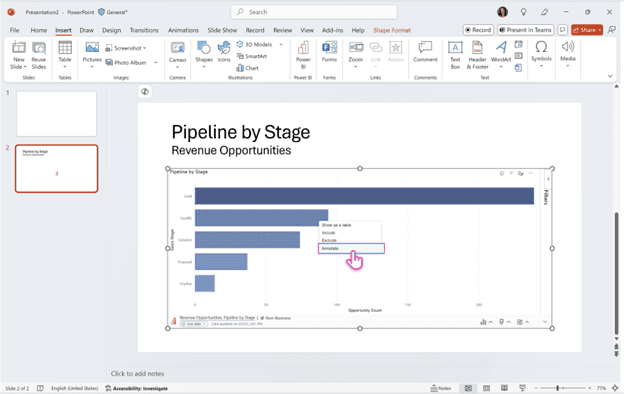
Uplift your storytelling by using annotations on your Power BI visualization in PowerPoint
Blog Posts

We have a new improvement in preview that allows users to make their presentations even more engaging by adding data point annotations to the visuals incorporated into their slides. The Power BI add-in for PowerPoint significantly enhances presentations with live business insights, facilitating data-driven conversations and meetings. Annotations enable users to add descriptive text directly to visualizations, offering contextual… READ MORE
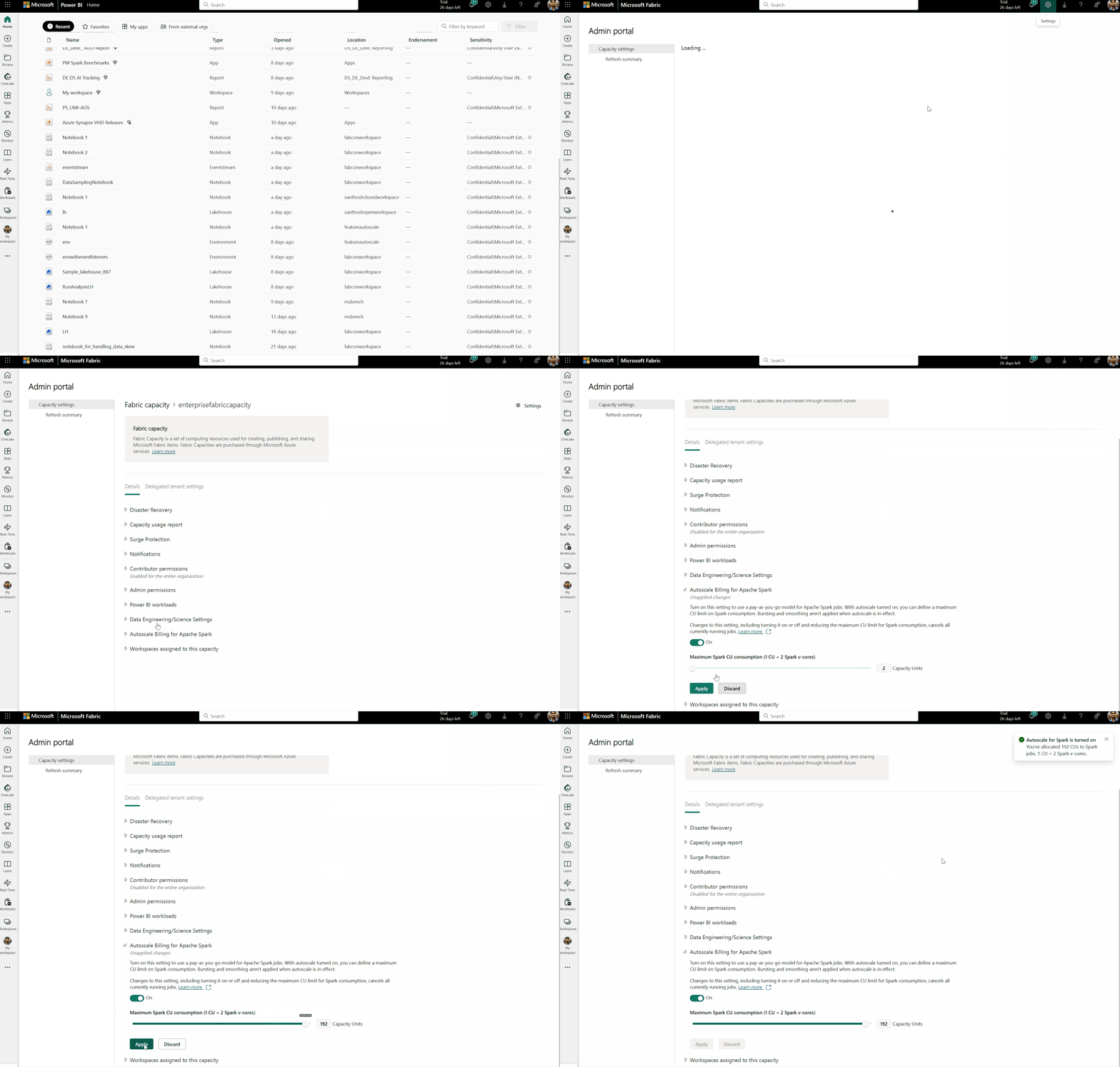
Introducing Autoscale Billing for Spark in Microsoft Fabric
Blog Posts

We are introducing Autoscale Billing for Spark in Microsoft Fabric, a new billing model designed to offer greater flexibility and cost efficiency for Spark workloads. With this model, when enabled, your Spark workloads will no longer directly consume the Fabric capacity this billing option is enabled on; instead, they will run alongside your existing capacity (F2 or… READ MORE

It’s time to Future-Proof Your Data
Blog Posts

Data now sits at the foundation of decision-making, so the ability to seamlessly gather, integrate and act on information is critical. It’s perhaps not surprising that organizations are increasingly fed up with fragmented data silos, disconnected insights, needlessly rigid tools and processes, along with limited write-back functionality. Today’s data and IT leaders are looking to… READ MORE

Execute Fabric Data Pipeline from Azure Data Factory
Blog Posts

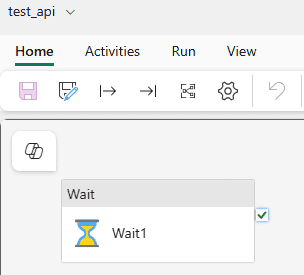
In the blog post Call a Fabric REST API from Azure Data Factory I explained how you can call a Fabric REST API endpoint from Azure Data Factory (or Synapse if you will). Let’s go a step further and execute a Fabric Data Pipeline from an ADF pipeline, which is a common request. A Fabric capacity cannot… READ MORE

5 Trends in the Data Lakehouse Space
Blog Posts

Free Copy of Apache Iceberg: The Definitive Guide Free Apache Iceberg Crash Course The data lakehouse is emerging and evolving as the next iteration of analytical data architecture. It builds on previous approaches by integrating the data lake and data warehouse, which were traditionally separate, and reimagining the tightly coupled components of a data warehouse… READ MORE

Real-Time Dashboards
Blog Posts

Real-Time Dashboards With the Real-Time Intelligence suite in Microsoft Fabric, we have everything we need to build an analytics solution for our streaming and telemetry data. One of the missing pieces in that puzzle has been the capability to get real-time insights on the data arriving in the data estate. A few months back, we… READ MORE

Fabric Security is a Team Sport Now – For Everyone
Blog Posts

In times of data breaches and millions of customer entries breached, the security of your data platform is one of the things you need to consider upfront and – preferably in all your data solutions. When Microsoft Fabric was announced the concepts of connecting to other parts of your already secured data platform in Azure… READ MORE

Connect to OneLake Using Azure Storage Explorer
Blog Posts

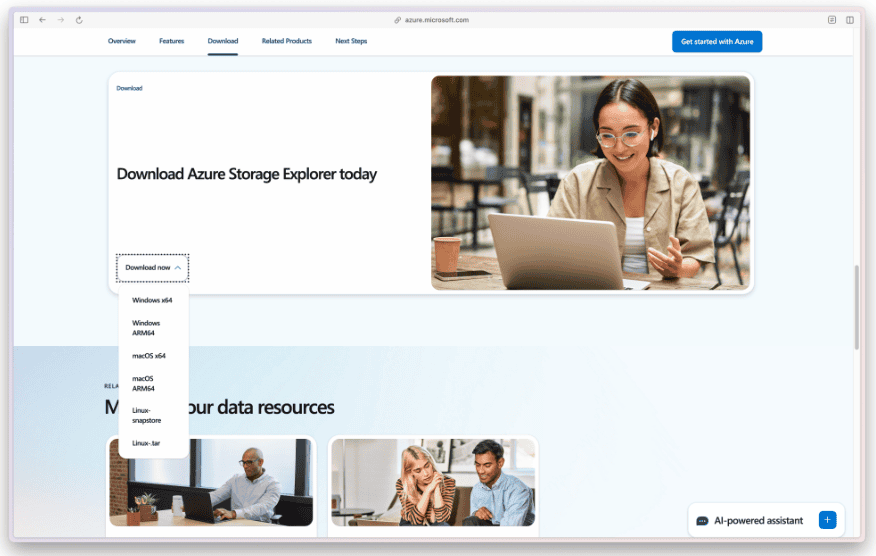
OneLake is a unified data lake included with every Microsoft Fabric tenant, designed to handle large volumes of data from various sources. It serves as a central hub for all your analytics data, ensuring one accessible copy for multiple analytical engines. This setup enhances collaboration and reduces management overhead by eliminating the need for multiple… READ MORE

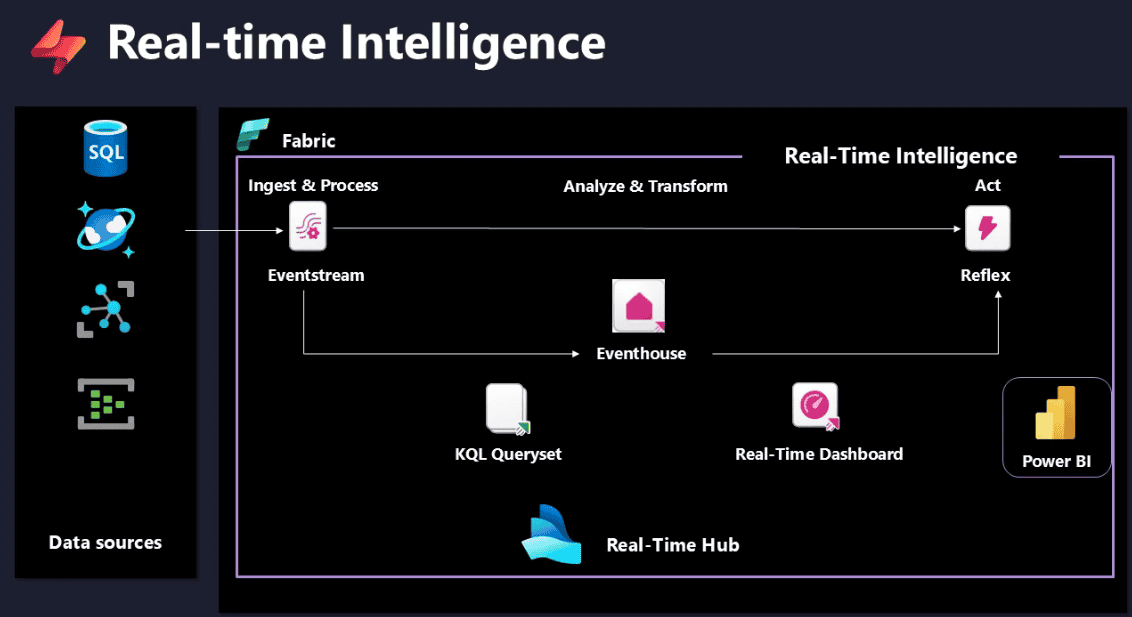
Real-Time Intelligence in Microsoft Fabric – The Ultimate Guide!
Blog Posts

Once upon a time, handling streaming data was considered an avanguard approach. Since the introduction of relational database management systems in the 1970s and traditional data warehousing systems in the late 1980s, all data workloads began and ended with the so-called batch processing. Batch processing relies on the concept of collecting numerous tasks in a group (or batch)… READ MORE